Backflow testing on fire sprinkler connections verifies that the assembly preventing contaminated water from reaching the potable supply is still functioning correctly. Water sitting in sprinkler piping is stagnant, often discolored, and can contain sediment, bacteria, or corrosion byproducts. The backflow preventer is the barrier between that water and the drinking water system.
This guide explains how RPZ (reduced pressure zone) and double check valve assembly (DCVA) tests are performed, what the measured values mean, and what certification and scheduling requirements apply in Texas. It is written for facility managers and property owners who need to understand the process before, during, and after a test. For a practical overview of what happens during a backflow test from the property manager's perspective, see this guide on what to expect during backflow testing.
Why Fire Sprinkler Connections Require Backflow Testing
Fire sprinkler piping holds water under pressure at all times (in wet systems) or contains residual water from previous testing and activation events. That water is not potable. It sits in steel or CPVC piping for months or years, accumulating sediment, biofilm, and corrosion products. If a pressure drop occurs on the supply side (a water main break, for example), that contaminated water can be pulled backward into the building's drinking water supply through a process called backflow or backsiphonage.
Water authorities mandate backflow prevention assemblies on fire sprinkler connections to protect the public water system. NFPA 13 does not itself require backflow preventers for fire protection purposes (its concern is reliable water delivery to sprinkler heads), but local plumbing codes and water utility rules do. The result is that nearly every commercial sprinkler connection has a testable backflow assembly, and that assembly must be tested on a defined schedule.
RPZ Test Procedure
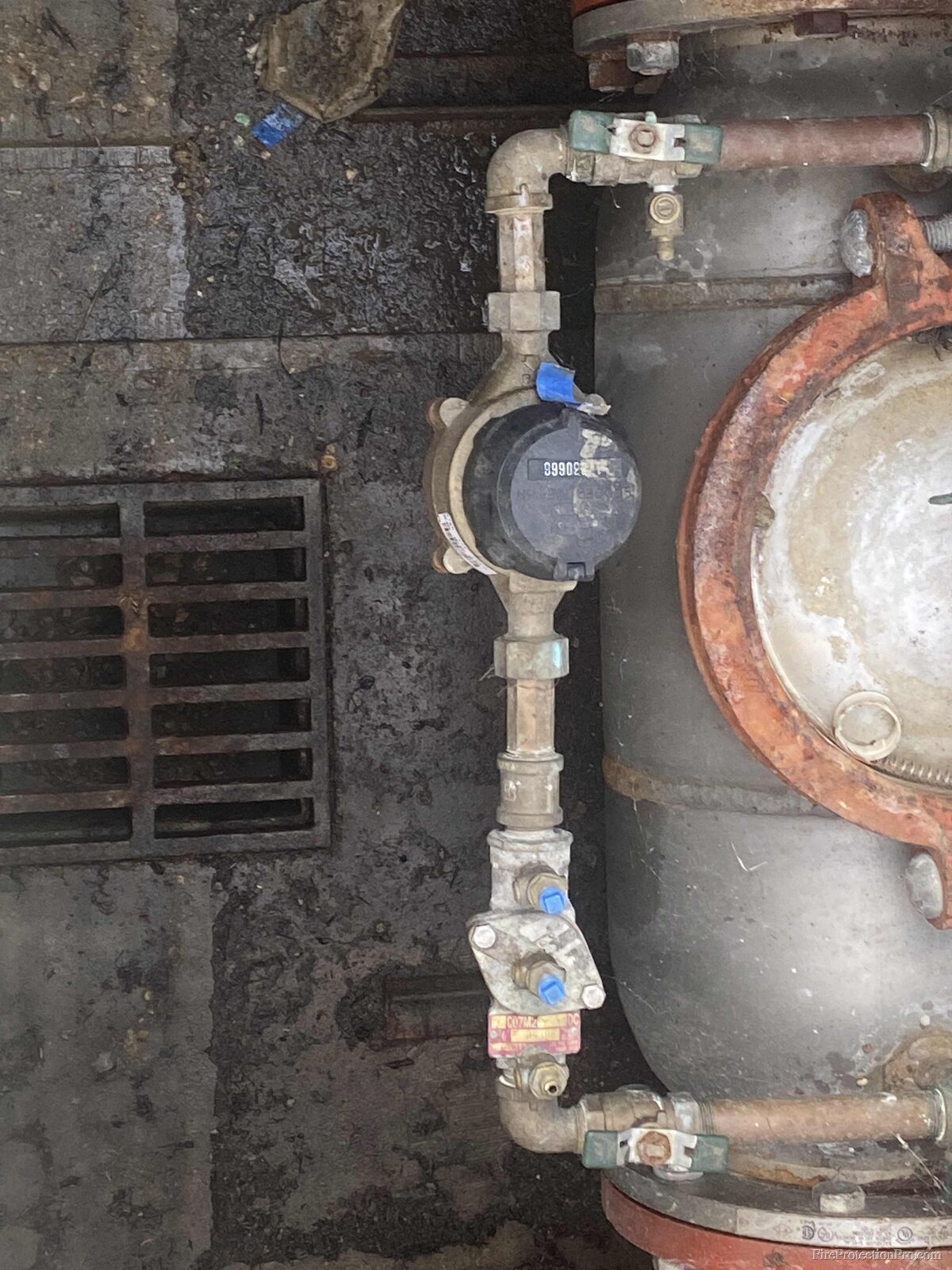
A reduced pressure zone (RPZ) assembly contains two independently acting check valves and a differential pressure relief valve between them. The relief valve is the key safety feature: if either check valve fails, the relief valve opens and dumps water to a drain rather than allowing contaminated water to pass upstream. Testing an RPZ assembly involves three separate checks using a differential pressure gauge kit connected to the assembly's test cocks.
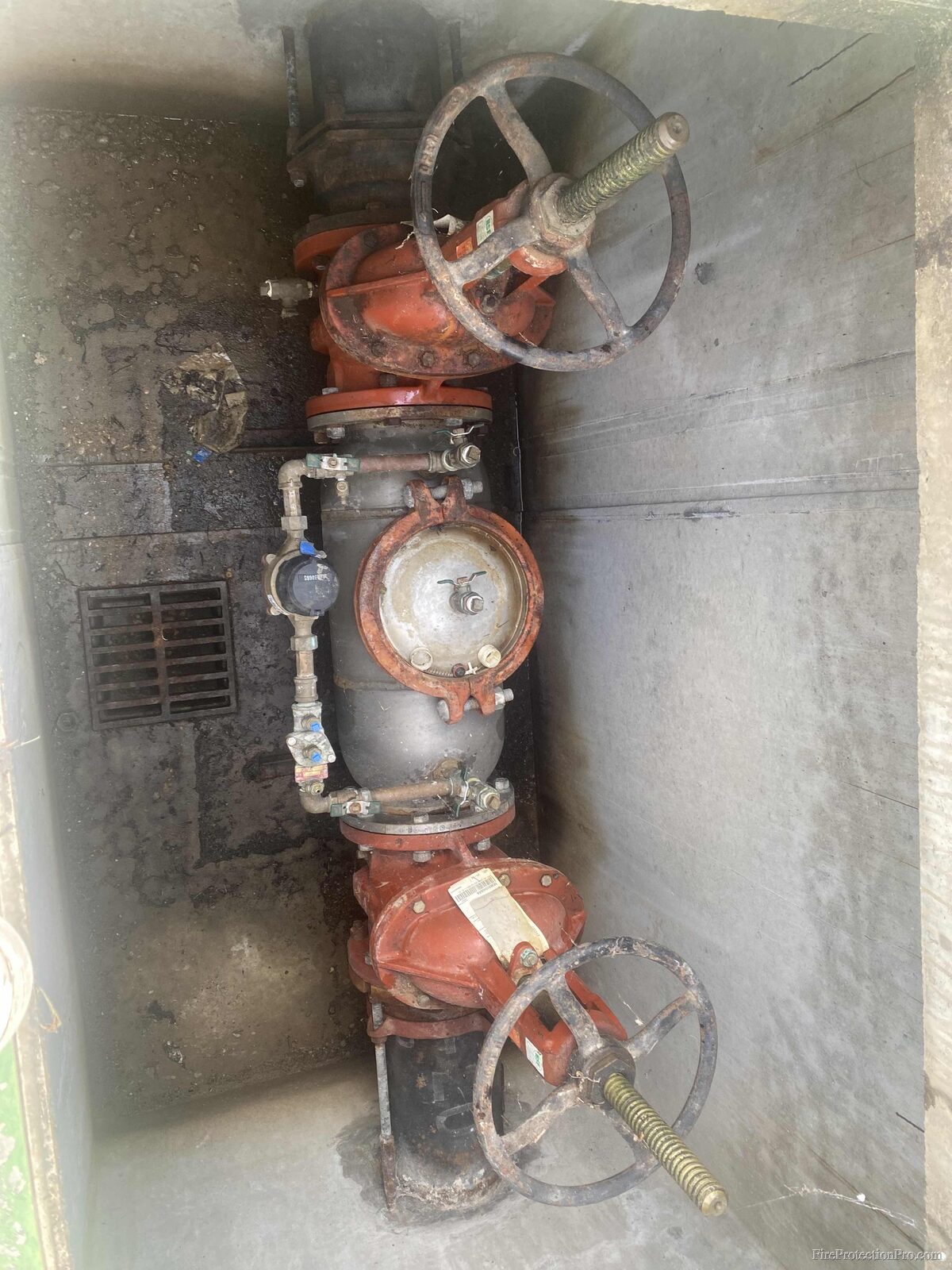
Test 1: First check valve
The tester closes the downstream shutoff and opens the appropriate test cock connections to isolate the first check valve. The differential pressure gauge measures the pressure drop across the first check. A properly functioning first check valve must hold a minimum of 5 PSID (pounds per square inch differential). If the reading is below 5 PSID, the first check is leaking and the assembly fails.
Test 2: Relief valve opening point
With the test apparatus still connected, the tester creates conditions that simulate a pressure imbalance in the zone between the two checks. The relief valve must open and discharge water when the differential pressure in the zone drops to within 2 PSID of the first check's reading (or less). For example, if the first check holds at 8 PSID, the relief valve should open at or before 6 PSID. If the relief valve does not open at the correct point, or does not open at all, the assembly fails.
Test 3: Second check valve
The tester isolates the second check valve and measures its holding pressure. The second check must hold a minimum of 1 PSID. Because the second check is the last line of defense (after the relief valve), a lower threshold is acceptable, but it must still hold positive pressure. A reading of 0 PSID means the second check is not sealing and the assembly fails.
Double Check Valve Assembly Test Procedure
A double check valve assembly (DCVA) is simpler than an RPZ. It contains two independently acting check valves but no relief valve. DCVAs are typically used on fire sprinkler connections where the hazard level is lower (no chemical additives in the system) and local code permits their use.
Testing a DCVA involves two checks:
Test 1: First check valve
The tester isolates the first check valve using the test cock connections and measures the differential pressure. The first check must hold a minimum of 1 PSID. Unlike the RPZ first check (which requires 5 PSID), the DCVA first check has a lower threshold because there is no relief valve depending on it to maintain a pressure zone.
Test 2: Second check valve
The second check is isolated and tested the same way. It must also hold a minimum of 1 PSID. Both checks must pass independently. If either check reads 0 PSID or shows leakage on the gauge, the assembly fails.
Pass/Fail Criteria and Measured Values
The following table summarizes the minimum acceptable readings for each test. Values below these thresholds constitute a failure.
| Assembly | Test | Minimum | What It Means |
|---|---|---|---|
| RPZ | First check valve | 5 PSID | Primary barrier holds adequate pressure |
| RPZ | Relief valve opening | Opens within 2 PSID of first check | Relief valve activates before contamination can pass |
| RPZ | Second check valve | 1 PSID | Backup barrier holds positive pressure |
| DCVA | First check valve | 1 PSID | Primary check valve seals against backflow |
| DCVA | Second check valve | 1 PSID | Backup check valve seals independently |
Readings are taken with a calibrated differential pressure gauge kit. The gauge must be accurate to within 0.2 PSID. Testers are required to have their gauges calibrated annually (at minimum), and the calibration certificate should be available on request.
A "pass" means all tests meet or exceed the minimum thresholds. A "fail" on any single test means the entire assembly fails and requires repair and retest.
Tester Certification and Equipment
In Texas, backflow prevention assembly testing must be performed by a tester holding a TCEQ (Texas Commission on Environmental Quality) Backflow Prevention Assembly Tester (BPAT) license. The certification requirements include:
- Initial training. A 40-hour training course covering backflow prevention theory, assembly types, test procedures, and hands-on practice with gauge kits.
- Examination. A written and practical exam administered by a TCEQ-approved training provider.
- Continuing education. 24 hours of CE credits for license renewal, including a minimum of 8 hours of hands-on testing practice. The hands-on requirement ensures testers maintain proficiency with actual test equipment, not just classroom knowledge.
- Calibrated test kit. The differential pressure gauge kit used during testing must be calibrated by a certified calibration facility. The tester should carry a current calibration certificate with the kit.
When hiring a tester, verify their TCEQ license number and ask for their gauge calibration date. Using an unlicensed tester or an uncalibrated gauge can invalidate the test results and create compliance issues with the water authority.
Test Frequency and Scheduling
TCEQ requires backflow prevention assemblies to be tested at installation and annually thereafter. The annual test must be completed by a licensed BPAT and the results submitted to the local water authority (typically the municipal water utility or water district) within the required timeframe.
- Standard schedule. Most fire sprinkler connections are tested once per year. The test date resets each year based on the previous test date, not a fixed calendar date.
- High-hazard connections. Some jurisdictions require more frequent testing for connections classified as high-hazard (systems with chemical additives, glycol loops, or connections to non-potable water sources). Check with your local water authority for specific requirements.
- After repair or replacement. Any time a backflow assembly is repaired or replaced, it must be retested before being returned to service.
- Submission deadlines. Local water authorities set deadlines for test report submission, typically 10 to 30 days after the test. Late submissions can result in violation notices, fines, or water service disconnection warnings.
Coordinate backflow testing with your sprinkler inspection schedule when possible. Both require access to the riser room, and scheduling them close together reduces the number of contractor visits and minimizes disruption. However, the backflow test and the sprinkler inspection are separate scopes of work, often performed by different licensed specialists.
What Happens After a Failed Test
A failed backflow test means one or more components did not meet the minimum pressure thresholds during certified testing. The assembly cannot be left as-is. The response sequence is: document the failure, schedule repair, retest, and submit passing results.
For a detailed workflow covering immediate response, repair vs replacement decisions, retest procedures, and reporting requirements, see the backflow failure steps guide. That guide covers the full compliance closeout process from failure notification through final paperwork submission.
Key points to keep in mind:
- Some water authorities allow temporary continued service while repairs are scheduled. Others require immediate repair. Know your local policy before the test.
- Repairs must be performed by a qualified technician (not necessarily the same person who performed the test).
- After repair, a full retest is required, not just a recheck of the failed component.
- Passing retest results must be submitted to the water authority within the required timeframe.
When to Call a Licensed Contractor
Backflow testing is not a DIY task. It requires a TCEQ-licensed tester with calibrated equipment. Call a contractor when:
- Your annual backflow test is due or approaching.
- A previous test failed and the assembly needs repair and retest.
- You are installing or replacing a backflow preventer on a fire sprinkler connection.
- Your water authority has sent a notice requesting test documentation.
- You need to confirm which assembly type is installed and whether it is appropriate for your hazard classification.
For commercial backflow testing and fire protection services in Texas, find a licensed professional near you. We connect commercial property owners with certified backflow testers and fire protection contractors who handle testing, repair, and documentation.
Continue reading
- Backflow Failure Steps for Fire Sprinkler Systems
- Commercial Sprinkler Inspection Checklist
- Fire Sprinkler Risers: What Commercial Owners Should Know
Service pages